TL;DR
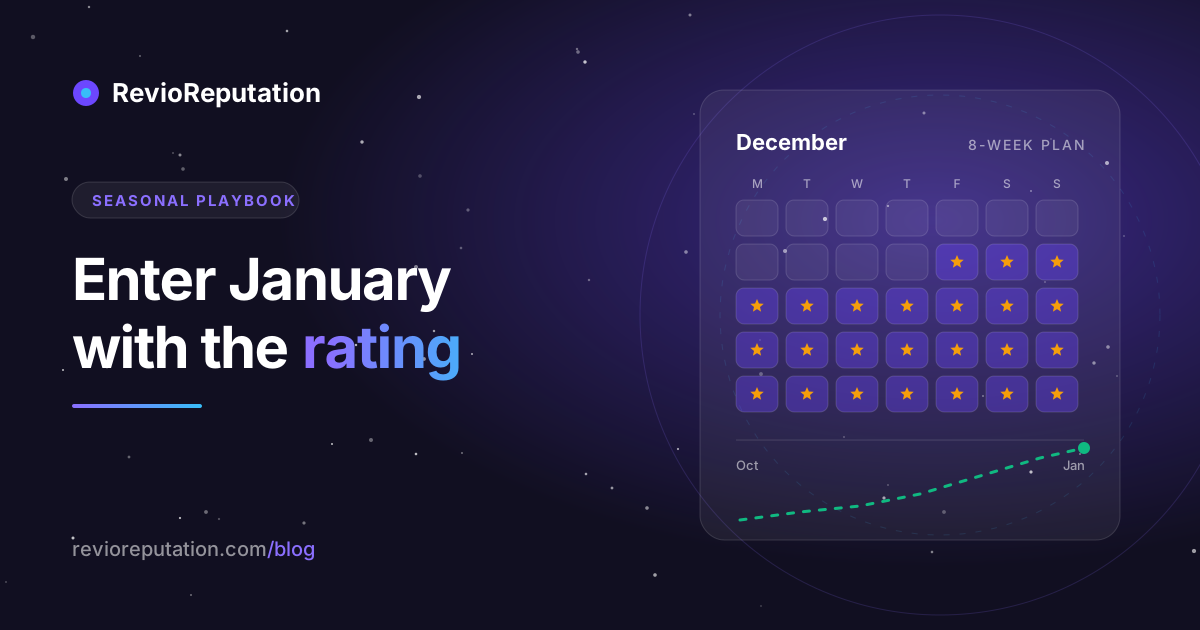
For most hospitality and personal-service businesses in Europe, the six weeks from late November to New Year hold the year's densest run of first-time customers: office parties, family dinners, guests visiting relatives, pre-party hair and nails, gift-voucher redemptions. Every one of them is a potential review, and reviews from December carry most of their ranking weight into February and March — exactly the months when you need them. This is an eight-week plan, starting mid-October, that gets the collection system live before the rush, keeps replies under control during it, and does not cross any of the lines that EU consumer authorities have started enforcing.
Why this window decides the first quarter
Two mechanics make the holiday weeks disproportionate.
Review recency drives ranking. Google's local results weight recent reviews far more than old ones; reviews older than about three months contribute little to the review signal (the numbers). Reviews collected in December are therefore your ranking in January, February and March — the quietest months, when a good position in the map pack is the difference between a full room and an empty one.
First-time customers review more than regulars. Reviewing is part of how people process a new experience. The couple who has eaten at your place every Friday for three years is not going to write anything; the family who booked you for a Christmas dinner because their cousin recommended you will, if asked at the right moment. The holiday weeks bring more first-timers than any other period.
The failure mode is universal: the system is set up in the second week of December, when the kitchen is already on fire, and the wave is half over. Hence the plan starts in October.
The plan
Weeks 1–2 (mid-October): the link and the code
Everything depends on one URL — the one that opens your Google review form directly, stars ready, in one tap. Not your listing, not Maps.
- Get your Place ID (Google's Place ID Finder, or a generator that looks it up — this one takes a business name and city, no account) and build the link:
https://search.google.com/local/writereview?placeid=…. Test it in a private window on a phone. - Generate the QR code and print it now, in the two forms you will need: a small sticker for the moment of payment (card terminal, bill folder, mirror, key-card sleeve) and an A4 for the place people wait. A print run takes a week you will not have in December.
- Decide the sentence your staff will say, and write it down. Short, conditional on nothing: "If you have thirty seconds, a Google review really helps a small place like ours — the code is on the bill." Not "if you enjoyed it" — that is the first step toward review gating — and never a star count.
Weeks 3–4 (late October – early November): the reply backlog and the profile
- Reply to everything already on your listing, newest first. A December prospect reading your profile sees the last twenty reviews and whether you answered them; a listing with thirty reviews and five replies tells them which twenty-five you did not think worth it. The three reply shapes take about two minutes each.
- Fix the Business Profile while it is quiet: holiday opening hours (Google shows "Hours might differ" for any business that has not confirmed them, which costs bookings), the set-menu or party-booking link as the primary button, fresh photos of the room dressed for the season. The checklist.
- Put the widget on your site, above the booking form or the menu, showing your real rating and count with the reviewers attached. Half of your December visitors arrive from a link, not from Maps, and never see your listing; the site is their only view of your reputation. Where to place it and what it must show.
Weeks 5–6 (mid – late November): staff, and the first wave
- Brief every front-of-house person on the sentence and the moment. Restaurant: with the bill. Salon: at the mirror during the final check. Hotel: at checkout, and in the checkout email. Clinic or studio: with the after-care sheet. The moment is when the experience is over, the phone is out, and the guest is not moving — placement by business type.
- Prepare the after-visit message for guests you are legally allowed to message — reservation-platform opt-ins, loyalty signups, an explicit checkbox. In Germany that is effectively opt-in only; Spain, France and most of the EU allow a soft opt-in for existing customers with an easy opt-out. If you are not sure what consent you hold, do not send; the QR code and the sentence need no personal data at all.
- Set a reply rhythm you can keep in December: every review, within two days, in the reviewer's language. If that will not survive a Saturday with two hundred covers, decide now whether it is you at 7 a.m., a named member of staff, or a tool that drafts the reply for you to approve. Deciding in the second week of December means it does not happen.
Weeks 7–8 (December): run it, and do not improvise
- Check the numbers weekly, not daily: scans versus new reviews. Scans without reviews means the link is wrong or the moment is wrong; reviews without scans means staff are asking and the code is decorative — both are fine to learn, neither is fine to learn in January.
- Reply to the bad ones first. A one-star review from a Christmas party that went wrong will be read by every group booking for the next month. Wait an hour, acknowledge the specific thing, say what changes, take it off the page with an email address. The reply is for the reader, not the reviewer. What it never contains: an argument, anything about the reviewer's behaviour, or an offer that reads as a bribe to change the rating — Google's policy prohibits that and the next reader can tell.
- Do not run a promotion for reviews. "Free dessert for a review", "10% off your next visit if you review us" — every December somebody tries it, and it is prohibited by Google even with disclosure and treated as a misleading commercial practice under EU consumer law after the Omnibus Directive. What the enforcement looks like. Put the dessert budget into the service recovery that produces honest five-star reviews instead.
- Keep the widget honest. As the reviews come in, resist the filter that hides the three-star ones from the number. Display whichever reviews you like; the rating and count the widget prints must be the listing's own.
Week 9 (early January): the part everyone skips
The rush is over, and this is where the return on the whole plan is collected or lost.
- Reply to the backlog within the first week of January. December's reviews are being read by January's prospects right now.
- Write to the guests who left five-star reviews, if you have a lawful channel: not asking for anything, just thanking them and mentioning what is on in February. They are the regulars of next year.
- Read the three-star reviews as a list. Three people mentioning the wait at the door on Saturdays is an operations note with an audience; fix it before it is thirty.
- Leave the QR code where it is. The system that worked in December works in February; the only thing that decays is the sentence, so mention it to staff again.
What this looks like by business type
| Restaurant / café | Hotel / guesthouse | Salon / barber / spa | |
|---|---|---|---|
| The moment | With the bill | Checkout + checkout email | Mirror at the final check |
| The printed form | Sticker on the bill folder; A4 by the coats | Key-card sleeve card; A5 on the desk | Sticker on the card terminal; small card in the mirror frame |
| December pressure point | Large-group bookings: brief the host, not just servers | Multi-night guests: ask on the last morning, not the first | Back-to-back appointments: the sentence, or nothing happens |
| The one-star risk | Party dinner timing | Noise, heating, breakfast queue | Running late |
| Reply owner | Manager, 7 a.m. daily | Front desk, each shift | Owner, end of day |
Doing it without a second job
All of the above works with a printed code, a phone and discipline. The parts that break under December load are the replies and the "is the widget still current" check, because both need someone to remember. That is the job RevioReputation does: every review from every profile in one inbox, a reply drafted in the reviewer's language and your tone for you to edit and post, and the widget on your site fed from the same connection. The QR code, the poster and the widget snippet on their own are ReviewQR — free for one location, no card.
Start in October. The rating you enter January with is being decided now.
New blog posts. No spam.
Get the next reputation playbook delivered when it drops.